Crippled: Austerity and the Demonization of Disabled People by Frances Ryan
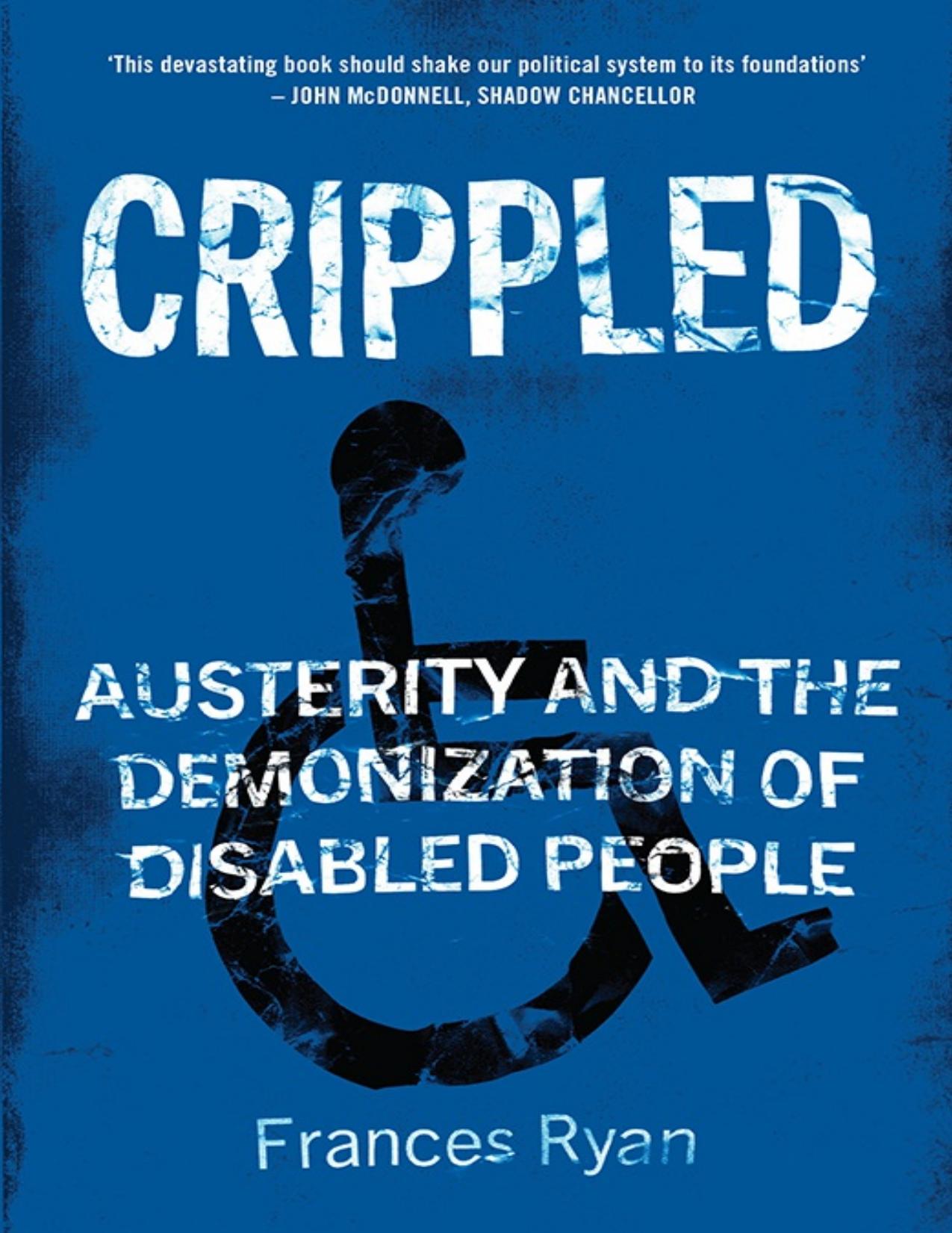
Author:Frances Ryan
Language: eng
Format: epub, pdf
Publisher: Verso
This eBook is licensed to Tanner Tygret, [email protected] on 07/29/2019
CHAPTER 5
Women
For the last five years, Alice, twenty-four, has been making a living as a sex worker. She’s also disabled; she has bipolar type II that leads to mania, depression and severe lack of physical energy.
For Alice, the two sides of her life – her disability and sex work – are inexorably linked. Alice (not her real name) started this line of work when she was nineteen and in her second year at university – a way to make some extra cash to top up her student loan. She had always intended to quit sex work after graduating. ‘That was three years ago,’ she says.
Upon leaving university, she struggled to retain a job. Traditional employment – with a boss and set working hours – proved impossible during manic episodes and her job as a university administrator came to an end for that reason. She started a PGCE in the East Midlands in September 2017 with the hopes of becoming a teacher but her mental health meant she kept missing lectures and the university eventually recommended she take a year out. ‘I’ve to all intents and purposes [had to] drop out,’ she says.
The disability benefit system is supposed to be there to catch people like Alice; a safety net for when ill health means she cannot have a job to pay the bills. But she is in a catch-22: she cannot claim the out-of-work sickness benefit, Employment Support Allowance (ESA), because she is still registered as a student, despite the fact that her mental health meant she had to leave her course. ‘On the one hand, I’ve got someone saying, “You’re too unwell to study or work.” On the other, I’ve got [the government] saying, “You’re not unwell enough to get support, and go away,” ’ she says.
On top of this, she was turned down for the other key disability benefit, Personal Independence Payment (PIP). In the middle of a manic episode she could not fill in the extensive paperwork. ‘Ironically, I wasn’t well enough to chase them,’ she says. She had to appeal the decision, which constitutes a mound of paperwork and then a tribunal in court. Besides, Alice worries that mental health problems are rarely seen by the benefit system as being as debilitating as, say, being a wheelchair user. It’s a concern backed up by evidence: in 2018, the High Court ruled that the PIP system was ‘blatantly discriminatory’ against people with mental health problems, even going as far as to order the government to review 1.6 million disability benefit claims.1 It all adds up to a situation where Alice could not pay the bills with either a wage or social security. As she put it to me, ‘I’ve got no income to speak of and the government don’t care.’
Instead, she’s had to rely on sex work to get by. When I first speak to Alice, she’s working. I’ve accidentally called her early and her client is still in her home.
Download
Crippled: Austerity and the Demonization of Disabled People by Frances Ryan.pdf
This site does not store any files on its server. We only index and link to content provided by other sites. Please contact the content providers to delete copyright contents if any and email us, we'll remove relevant links or contents immediately.
The Secret History by Donna Tartt(18964)
The Social Justice Warrior Handbook by Lisa De Pasquale(12171)
Thirteen Reasons Why by Jay Asher(8856)
This Is How You Lose Her by Junot Diaz(6843)
Weapons of Math Destruction by Cathy O'Neil(6223)
Zero to One by Peter Thiel(5742)
Beartown by Fredrik Backman(5688)
The Myth of the Strong Leader by Archie Brown(5472)
The Fire Next Time by James Baldwin(5392)
How Democracies Die by Steven Levitsky & Daniel Ziblatt(5181)
Promise Me, Dad by Joe Biden(5118)
Stone's Rules by Roger Stone(5058)
A Higher Loyalty: Truth, Lies, and Leadership by James Comey(4919)
100 Deadly Skills by Clint Emerson(4888)
Rise and Kill First by Ronen Bergman(4744)
Secrecy World by Jake Bernstein(4709)
The David Icke Guide to the Global Conspiracy (and how to end it) by David Icke(4664)
The Farm by Tom Rob Smith(4475)
The Doomsday Machine by Daniel Ellsberg(4461)
